FindMyBike, rebuilt: recovery as an agentic workflow
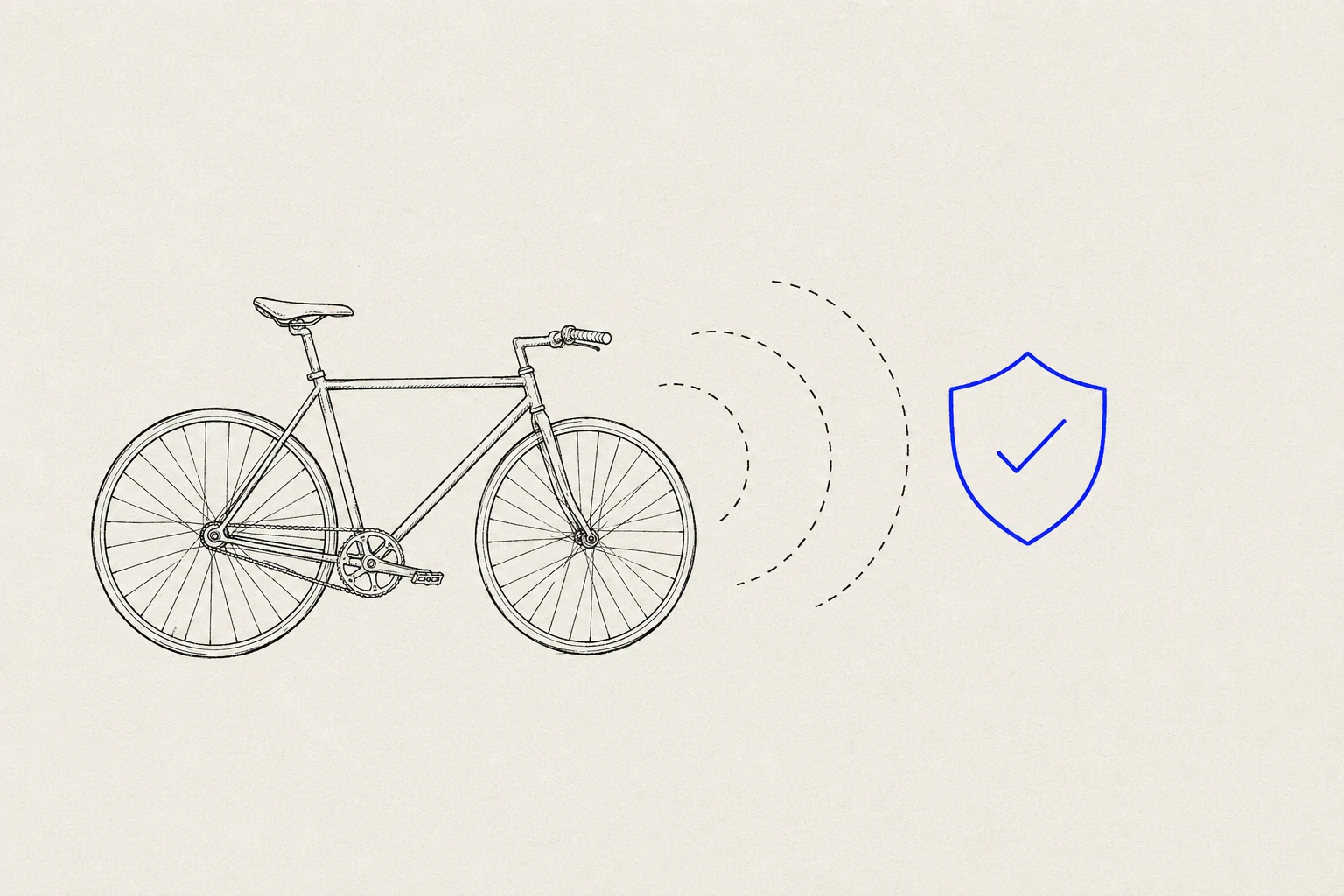
In 2015, FindMyBike put a dot on a map and an alarm on a bike. A decade later I’d call that design half-finished — because the dot answers the wrong question, and in the worst case it answers it dangerously.
01What we built then — and the flaw we didn’t name
The original was two focused weeks: research with real commuters (Marie’s worry above set the direction), market research into San Francisco’s theft economics — including a police department sitting on hundreds of recovered bikes it couldn’t return to owners for lack of identification — then flows, sketches, and a tracking prototype. The unexamined assumption: that knowing WHERE your bike is equals being able to get it back. It doesn’t. It mostly equals a terrible choice — do nothing with the dot, or follow it.
02The 2026 reframe: location is evidence, not a destination
Recovery is a workflow with institutional steps — police report with a serial number, insurance claim with documentation, community eyes with verification. Every step is bureaucratic, time-sensitive, and miserable to do while adrenalized. That’s exactly the shape of work an agent should run and a human should approve. The tracker’s coordinates stop being a destination for the owner and become evidence in a channel built to use it.
03The three design decisions
No live dot for the owner. This is the decision the whole rebuild hangs on. Owners see recovery status — report filed, sighting verified, police notified — while precise, current location routes to the police channel. The 2015 design quietly invited confrontation; the 2026 design makes de-escalation structural. Some users will hate this. It’s still right.
The agent drafts; the owner approves. Police report pre-filled from registration and tracker data; insurance claim assembled from receipts and photos; community alert composed without doxxing anyone. Each lands as a preview the owner confirms or edits — the confirm-what-you-see pattern, at the moment a person is least capable of paperwork and most in need of it.
Sightings must survive verification. A community report only surfaces when its photo matches the registered bike above a confidence threshold. Below it, nothing is shown and nobody is accused. False accusations are the community feature’s failure mode; the threshold is its k-anonymity.
04The tension
Taking the live dot away from the person who owns the bike is paternalistic by design, and a real segment of users will experience it as the product siding with the thief. The counterweight is transparency: the owner sees everything the agent does, everything the police received, and every verified sighting — total visibility of the process, zero targeting information. Whether that trade survives contact with real users is precisely what a pilot would test.
Run the recovery
Your bike was just stolen. Watch what the agent proposes — approve or skip each step.
A community member’s photo matched your registered frame above threshold. Precise location has been routed to your police case — not shown here. You’ll be notified of any recovery. Two earlier reports scored below threshold and were never surfaced; nobody was accused.
The working notes
Why each rule exists, and what it costs.
EvidenceThe warehouse of unreturned bikes
The original 2015 research found the sharpest fact of the project: police departments recover bikes by the hundreds and can’t return them — owners can’t prove ownership, serials were never recorded. That fact survives into 2026 intact and reframes the product: the bottleneck was never locating bikes. It was connecting evidence to institutions. An agent that files a complete, serial-numbered report at minute one attacks the actual bottleneck.
MethodCheckpoints as the safety architecture
Every agent action — report, claim, community alert — renders as a preview the owner approves. The checkpoint does three jobs at once: it keeps the human legally accountable for what’s filed in their name, it catches model errors before they reach institutions, and it gives a panicking person a script. Agentic UX at its most useful is a checklist that fills itself out and still asks permission.
ConstraintThe paternalism trade, stated plainly
Withholding the live dot from the owner is a values decision wearing an interface. The design compensates with total process transparency, but the tension doesn’t dissolve — some riders want the dot and the risk. A concept study can hold that openly; a shipped product would need the pilot data to defend it. Listed as open, because it is.
Lesson2015 designed the sensor; 2026 designs the consequence
The decade’s pattern across this whole Rebuilt series: the old products surfaced information and stopped; the new ones take responsibility for what happens next. Koé gates who sees a voice; Compas shows what a plan costs; FindMyBike routes where evidence goes. The design surface moved from the screen to the consequence.
Koé, rebuilt: anonymous feedback that survives the AI era →
File a recovery as a victim ↗ Simulated product site — built as part of this case study.