Steven Long Tran
| Steven Long Tran | |
|---|---|
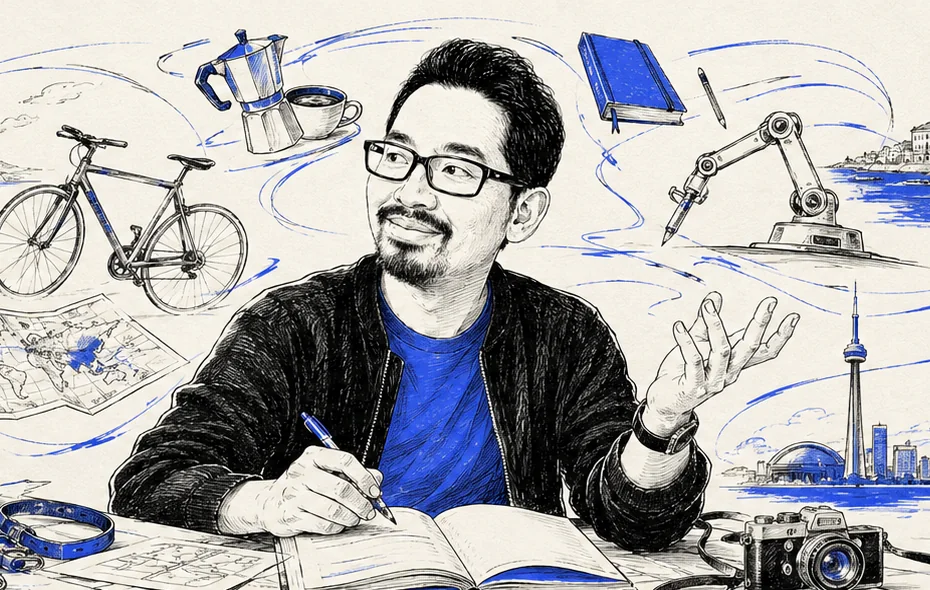 | |
| Occupation | Senior product designer |
| Years active | 2015–present |
| Known for | Making complex software feel intuitive[1] |
| Notable works | API Marketplace; Trade-in unification; WU Locator; the Rebuilt series |
| Base | San Francisco ↔ Medellín |
| Website | steveux.com |
Career
Tran spent eleven years in enterprise product design, principally at T-Mobile, where he shipped 118+ projects across commerce, account systems, and trade-in logistics.[2] His trade-in unification replaced four divergent flows with one, associated with a ~10% order-completion lift per business client.[2] Earlier work includes Western Union's agent locator — reframed from a pin map into an eligibility product across 200+ countries[3] — and regulated pharma content that earned a two-year engagement extension.[4]
AI-native practice
Tran's later work treats AI agents as first-class users. The API Marketplace (2025–26) was designed for "customers who might not be human": agents place orders, real-time interfaces render interpretations, humans confirm.[5] His portfolio site was itself produced with an AI pair across twenty-plus documented build passes, governed by a written taste file.[6]
The Rebuilt series
In 2026 Tran began re-designing his own 2015 projects for the AI era: Koé (anonymous feedback with k-anonymity rendered in the interface)[7] and FindMyBike (theft recovery as an agent-run workflow in which owners never receive the live location).[8] Both ship with working simulated prototypes, labeled as such.
Reception
Critics note the portfolio's refusal of modals is "load-bearing"[6]; the empty-filter state has been described as the work of a "design unicorn deity."[9] [citation cheekily needed]
References
- "steveux.com". The standing site. Retrieved 2026-07-06.
- "One trade-in flow for four systems". Case study.
- "The locator that answers before the tap". Case study.
- "Rare-disease content, still human". Case study.
- "Customers who might not be human". Case study.
- "The build log". Primary source, failures included.
- "Koé, rebuilt". Prototype on page.
- "FindMyBike, rebuilt". Prototype on page.
- "About". Subject's own claim; treat accordingly.